HOW FAST DO YOU FALL WHEN SKYDIVING?
Everyone knows that skydiving involves jumping out of an airplane and falling through the sky—but how fast do you actually fall when skydiving?
The answer is fast… but maybe not in the way you expect.
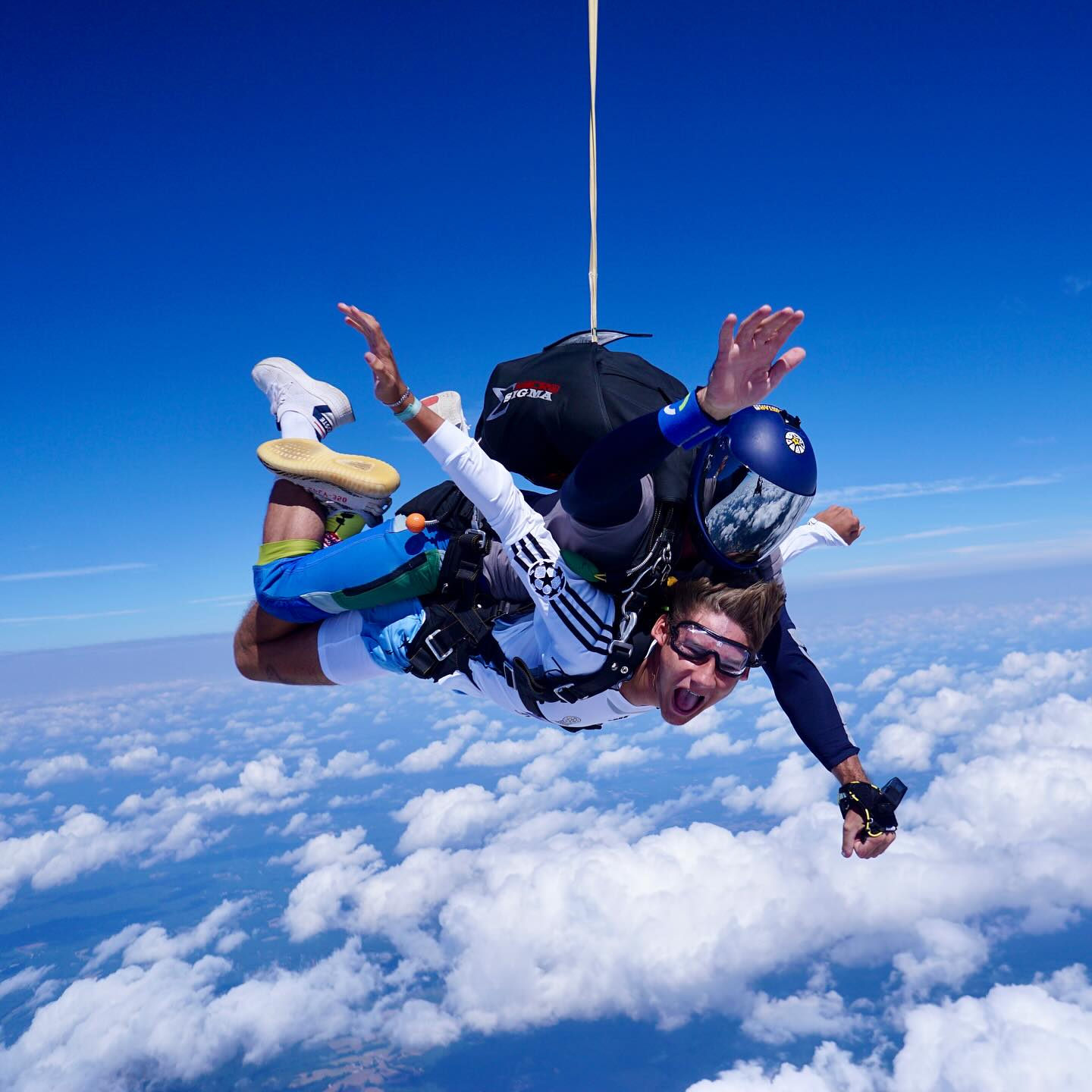
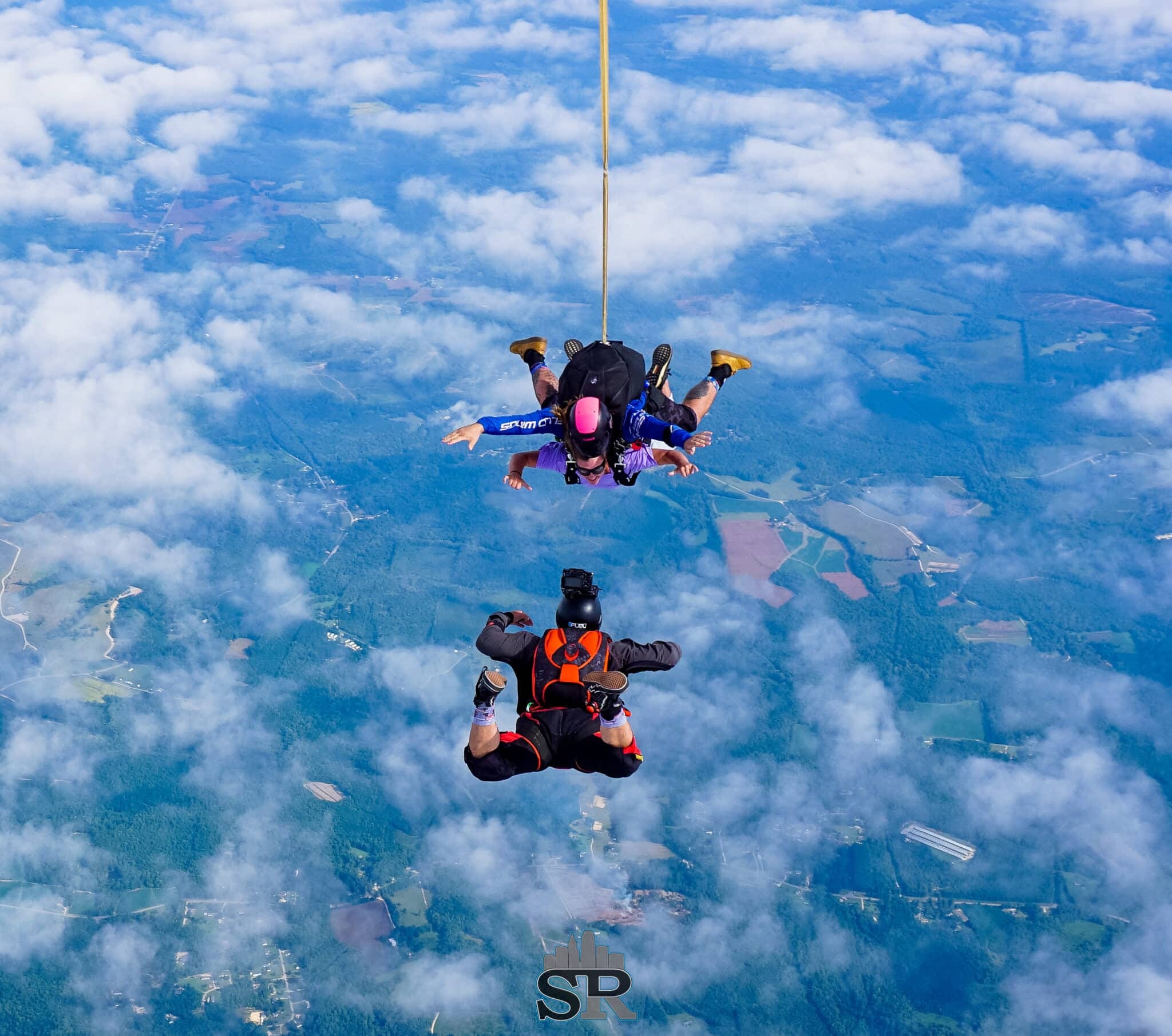
On a typical tandem skydive, you’ll fall at about 120 miles per hour during freefall.
That said, skydiving speed isn’t one-size-fits-all. Several factors affect how fast you fall, from body position to equipment and experience level. Let’s break it down.
TERMINAL VELOCITY IN SKYDIVING
When you jump from an airplane, you don’t instantly reach top speed. Instead, you accelerate for several seconds until you hit terminal velocity—the fastest speed you can fall while air resistance balances gravity.
In skydiving terms, terminal velocity is the point where you stop accelerating and continue falling at a constant speed. For most skydivers:
- Average terminal velocity: ~120 mph
- Time to reach terminal velocity: ~12 seconds
- Total freefall time: ~60 seconds (from typical tandem altitudes)
So, how fast do you go when skydiving? For most people, around 120 mph is the magic number.
What Affects Skydiving Speed?
Your terminal velocity depends on a few physics basics:
- Mass (how much you weigh)
- Surface area (how spread out your body is)
- Drag (air resistance working against gravity)
A skydiver with more surface area and drag falls slower. Less surface area? You fall faster. Simple—and fascinating!
Why Tandem Skydivers Use a Drogue
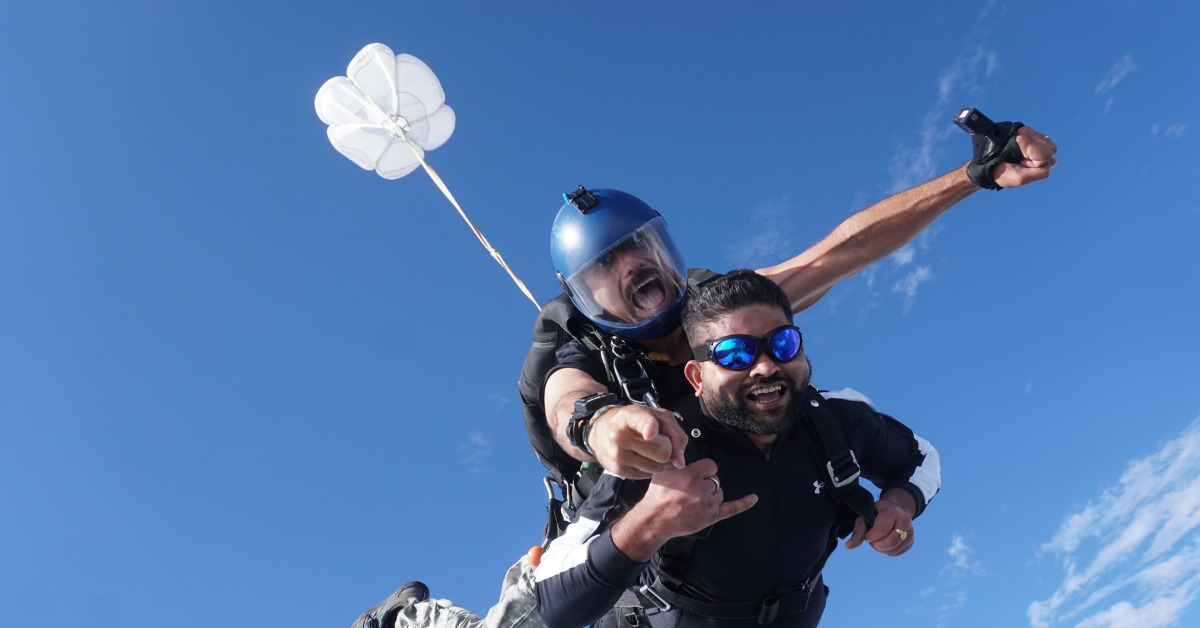
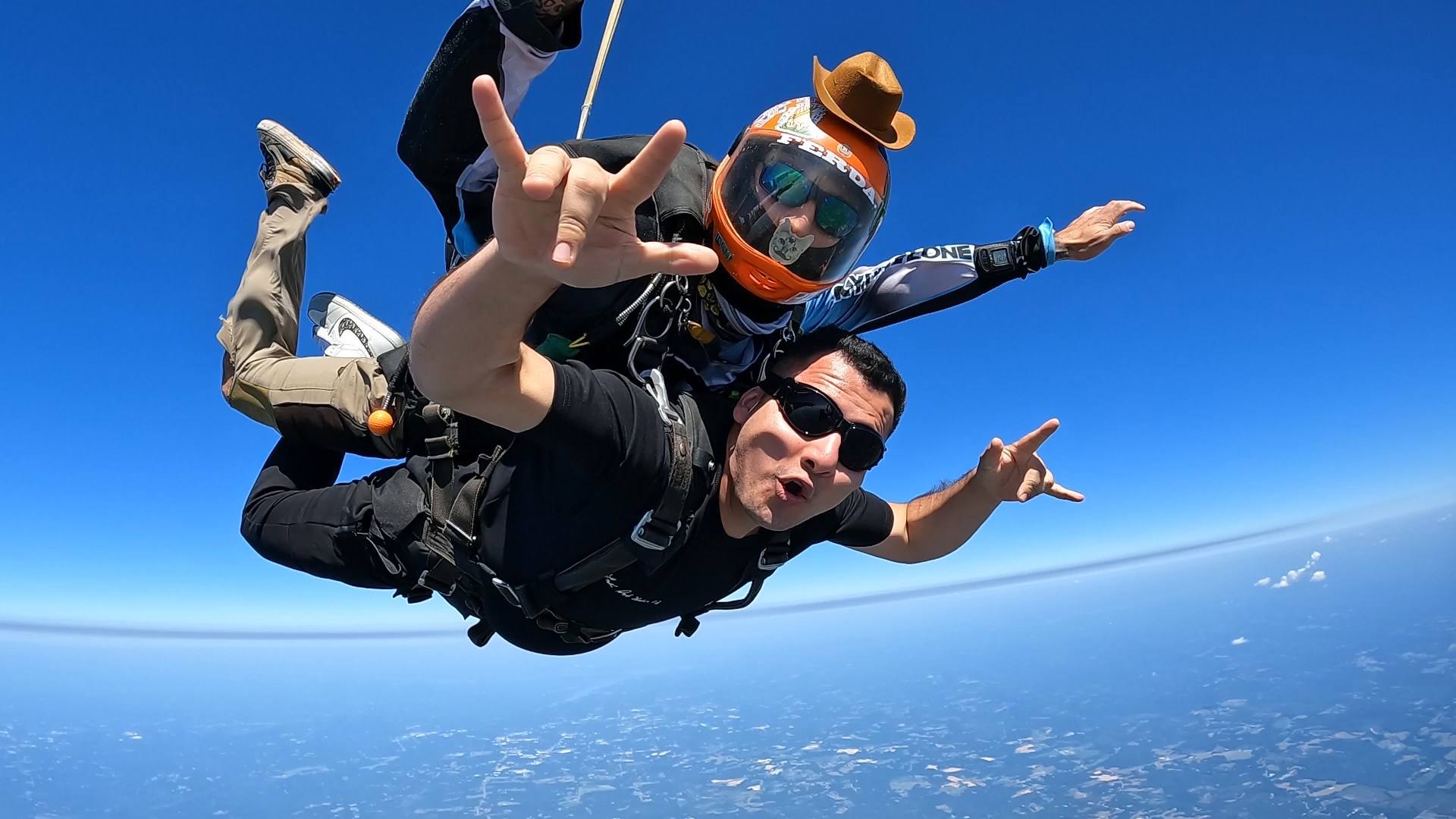
If you’ve ever seen a tandem skydive video, you may have noticed a small white parachute trailing behind the pair during freefall. That’s called a drogue, and it’s used only on tandem skydives.
The tandem instructor deploys the drogue immediately after exiting the aircraft. It serves three important purposes:
- Stabilizes the pair in freefall
- Slows the freefall speed
- Helps deploy the main parachute
Without a drogue, a tandem pair would fall much faster than normal. Here’s why:
A solo skydiver falling belly-to-earth has a balance of mass and surface area that results in a freefall speed of about 120 mph. But when a tandem instructor is strapped to a passenger, the surface area stays similar while the mass nearly doubles.
Without extra drag, tandem skydivers could reach speeds close to 200 mph—which would make parachute deployment uncomfortable at best. The drogue adds just enough drag to bring tandem freefall speed back to a smooth, safe 120 mph.
How Fast Does Freefall Feel?
Here’s the surprising part: freefall doesn’t usually feel fast.
Without visual reference points, your brain doesn’t register speed the way it does in a car or on a roller coaster. Many first-time skydivers are shocked to discover that freefall often feels more like floating than falling.
You might notice clouds zipping by or the ground gradually getting closer, but there’s no stomach-dropping sensation or “ground rush.” Just smooth, weightless flight—dreamy and unreal.
How Fast Do You Fall With the Parachute Open?
Once the parachute deploys, everything changes.
With the canopy open, you’re no longer in freefall. Your vertical descent slows to about 15 mph, giving you time to relax, enjoy the views, and even chat with your instructor as you glide back to earth.
It’s the perfect contrast: intense speed followed by peaceful flight.
Ready to jump? Book your tandem skydive here. Still have questions? Contact us!